A program supporting startups with Cloud and AI Factory services at HITECHCLOUD

In-depth review that uncovers dormant malware, sophisticated attack behavior, compromised accounts and intrusion indicators your systems have not flagged.
HiTechCloud Threat Hunting is a service that proactively reviews systems, detects threats already hiding inside them and helps remove those threats before they turn into serious incidents.
The service focuses on the sophisticated behavior that conventional alerting can miss, such as dormant malware, lateral movement, fileless attacks, unusual beaconing, abused accounts and signs of APT activity.
By combining cybersecurity specialists, threat intelligence, log analysis, endpoint data, network telemetry and the MITRE ATT&CK framework, HiTechCloud helps businesses see the risks already present inside their operating environment.
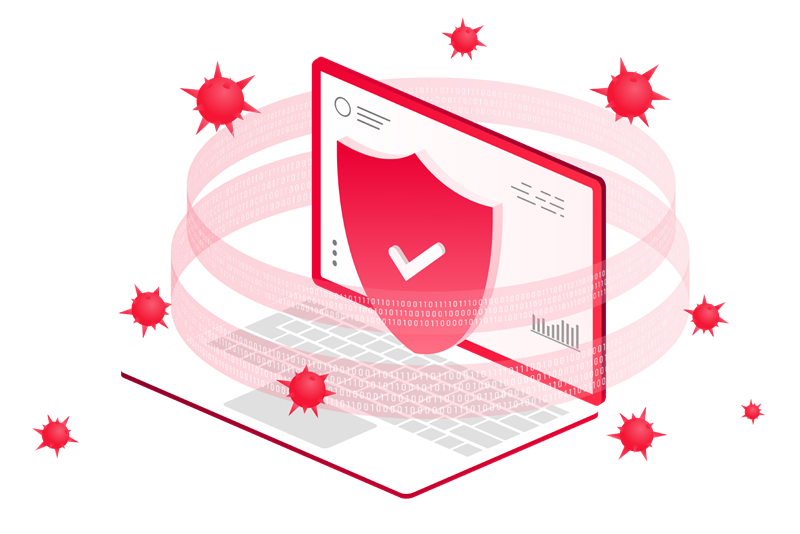
Our specialists analyze multiple data sources, correlate IOCs and TTPs, and build timelines to pinpoint high-risk anomalies.
Modern attacks hide inside legitimate activity, evade signatures, and leave only faint signals that must be correlated properly.
Many attack campaigns are built to evade rules, signatures and conventional monitoring, so the organization only detects them once damage has been done.
APT activity, ransomware, fileless malware or beaconing behavior can persist in a system for weeks or months before being clearly identified.
Operations teams often lack the time, the correlated data or the current attack knowledge to hunt continuously for anomalies across many log sources.
A SOC is easily overwhelmed by alert volume, while the risk signals that matter are scattered across endpoint, network, identity and application logs.
HiTechCloud helps enterprises test their existing defense layers more deeply, from endpoint to network, identity, cloud and business-critical applications.

Our security specialists analyze the event chain, determine the scope of impact, provide a clear conclusion and recommend remediation in priority order.

Can be delivered remotely or jointly on site, and works with your existing SIEM, EDR, firewall, logging systems and operating procedures.

Combines static analysis, dynamic analysis, system context, and threat intelligence to identify malware and suspicious behavior.

Rather than waiting for an alert, hunting works from attack hypotheses, IOCs, TTPs and real techniques in MITRE ATT&CK.
Threat hunting moves an organization from a reactive to a proactive posture, surfacing risk earlier and improving response capability after each engagement.

Find intrusion activity that has not triggered an alert or is hiding among legitimate system activity.

Shortens time to detection and supports early containment and remediation to limit damage to critical data, applications and infrastructure.

Cut alert noise, focus investigation on high-value suspicious signals and prioritize the actions with the greatest impact.

Improve detection rules, playbooks, response processes and in-house capability based on real hunting results.
Review anomalous processes, persistence, privilege escalation, malware, unfamiliar scripts and fileless behavior.
Analyze beacons, command-and-control connections, anomalous traffic, malicious domains and lateral movement.
Look for signs of account takeover, unusual sign-ins, privilege escalation and risky credential use.
Correlate cloud, API, application and workload logs to detect misconfiguration, unauthorized access or exploitation activity.
The Threat Hunting process is designed to minimize impact on operations, protect sensitive data and produce output that is useful to both engineering and management.
Clarify the protection objectives, available data sources, critical systems, deployment constraints, and criteria for evaluating results.
Correlates logs, endpoints, network telemetry, IOCs and threat intelligence to form well-grounded hunting hypotheses.
Hunt by TTP, analyze event chains, verify anomalous signals and assess the level of impact.
Recommend containment, malware removal, patching and configuration changes, prioritized by risk level.
Deliver a report, timeline, IOCs, recommended detection rules, playbooks and a plan for improving security operations.
Businesses can run Threat Hunting on a regular cycle, after a suspicious event, or ahead of critical operating periods.
Periodic checks of critical systems ahead of an audit, go-live or infrastructure expansion.
Review after a suspected data leak, compromised account, anomalous endpoint or an alert with insufficient evidence.
Assess the extent of malware, persistence, backdoors or signs of lateral movement inside the internal network.
Strengthens SOC capability with reusable hunting scenarios, IOCs, and response playbooks.
A proactive approach that does not rely solely on the alerts your security tools already produce.
Combines technical analysis, threat intelligence, and hands-on incident investigation experience.
Clear, priority-ranked reporting so leadership and operations teams share the same view of risk.
Recommendations to improve detection rules, configuration, processes and response capability after each hunting cycle.
A SOC typically monitors the alerts that tooling produces. Threat hunting is proactive: it forms a hypothesis, queries the data and looks for signs of attack that have not raised a clear alert.
Depending on scope, HiTechCloud can work with SIEM, EDR, firewall, DNS, proxy, operating system, identity and cloud logs, or with critical application data.
Yes. The service can be delivered remotely over a secure access channel, or jointly on site where you have data and compliance requirements.
The team classifies severity and recommends containment, isolation, clean-up, configuration changes and additional detection rules to reduce the chance of recurrence.
The service suits organizations with business-critical data systems that already run a SOC, SIEM or EDR and need periodic assessment, or that suspect an undetected intrusion.
Contact HiTechCloud for advice on a Threat Hunting scope matched to your infrastructure, data and risk profile.
Contact an expert




















































































































Start deploying quickly with HiTechCloud
Announcements, in-depth analysis and events













































Start building with HiTechCloud and shape a complete AI and cloud strategy
Log in to explore an ecosystem of more than 30 products and the tools that come with them
Get started
Talk to our sales team and find the AI and cloud solution that fits your business
Contact salesCông ty Cổ Phần Giải Pháp Công Nghệ và Phần Mềm Phổ Tuệ
Address: 128 Đường Bình Mỹ, Bình Mỹ Commune, Ho Chi Minh City, Vietnam
Tax code: 0318222903, first issued by the Ho Chi Minh City Department of Planning and Investment on 20/12/2023, amended for the second time on 15/10/2024
Responsible for content: Nguyễn Thanh An
Hotline: Phone: 0865.920.041
Email: Email: info@photuesoftware.com
Email Abuse: abuse@photuesoftware.com
Certificate: Telecommunications service registration certificate No. 18/GCN-SKHCN, issued by the Ho Chi Minh City Department of Science and Technology on 10/03/2026.
Căn hộ OT03, Tòa nhà The Landmark 81, 720A Đ. Điện Biên Phủ, Vinhomes Tân Cảng, Phường Thạnh Mỹ Tây, Tp. Hồ Chí Minh
5F, Ginza Sky Building, 3-13-4 Ginza, Chuo-ku, Tokyo, Japan
Email: contact.jp@hitechcloud.asia
6F, Yanghwa Tower, 5 Teheran-ro 20-gil, Yeoksam-dong, Gangnam District, Seoul, South Korea
5F, Sugimoto Building, 1-4-7 Tokui-cho, Chuo-ku, Osaka, Japan
Email: contact.jp@hitechcloud.asia
7F, ONE FUKUOKA BLDG, 1-11-1 Tenjin, Chuo-ku, Fukuoka, Japan
Email: contact.jp@hitechcloud.asia
81-83 Campbell Street Surry Hills, NSW 2010, Australia
Email: sydney@hitechcloud.asia
150 E Brokaw Rd, San Jose, CA 95112, United States
Email: contact.us@hitechcloud.asia
36 Robinson Road, #20-01, City House, Singapore 068877
Email: contact.sgp@hitechcloud.asia
Mezzanine Floor, Jumeirah Living Marina Gate 3, Dubai Marina, Dubai, PO Box 121828