Where sensitive data needs strong protection, RBAC not only simplifies access management but also improves system security. Let's joinHiTechCloud learn what RBAC is in the article below.
What is RBAC?
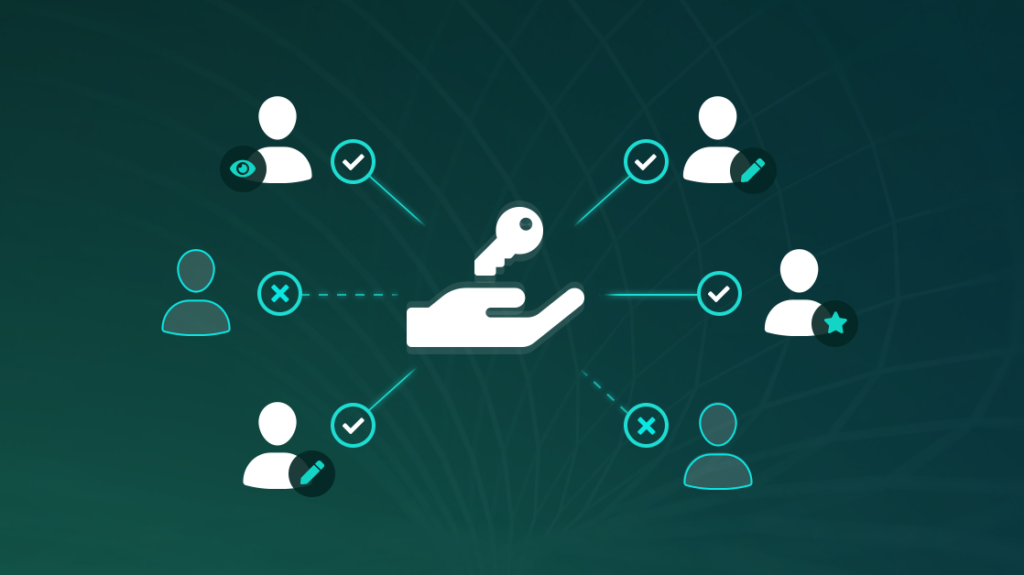
RBAC — Role-Based Access Control — is a method of managing access to systems and data based on a user's role within the organization. Instead of assigning access rights directly to each individual, RBAC assigns rights to defined roles and then assigns those roles to users, which simplifies access management and strengthens system security.
How does RBAC work?
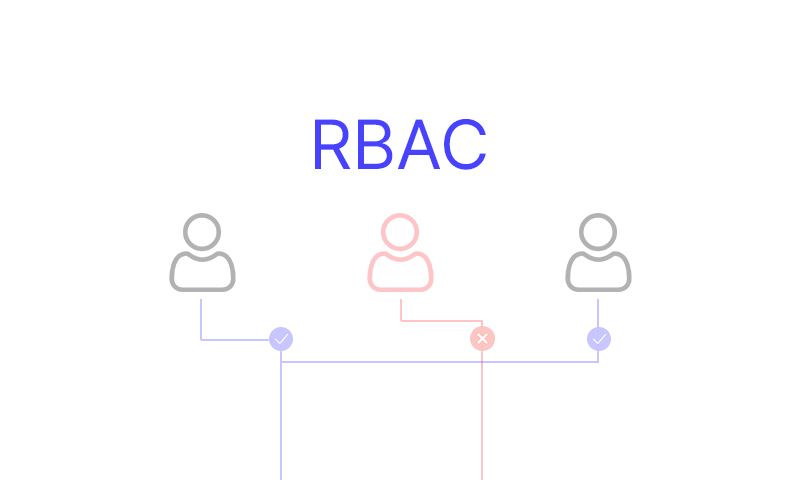
RBAC works by assigning access rights to users based on their role, such as “Administrator,” “Staff,” or “Customer.” Each role has its own distinct set of permissions. These permissions determine what actions a user can perform in the system, such as viewing, editing, or deleting data.
When a user tries to access a resource or perform an operation, the system checks the permissions attached to their role. If the role holds the required permission, the action is allowed; if not, it is denied.
Why is RBAC so important and necessary?
Role-based access control (RBAC) helps organizations manage identity and access (IAM) more effectively, streamlining authorization processes and access control policies. Specifically, RBAC delivers the following benefits:
Assign permissions more effectively
RBAC lets you define access rights by role instead of giving every user an individual set of permissions. This makes it easier for an organization to add, adjust or transfer roles for employees, and to handle access rights for contractors and third parties.
Maintaining compliance
RBAC helps organizations comply with data protection regulations, particularly in financial services and healthcare. The system gives regulators visibility into who has accessed and modified sensitive information.
Protect sensitive data
RBAC implements the principle of least privilege (PoLP), meaning users are granted only the access necessary to perform their tasks. For example, a new developer might be able to work with the source code but cannot change it without manager approval. In this way, RBAC reduces the risk of data loss or data breaches caused by intentional user actions.
Restricting access also reduces hackers' ability to carry out cyberattacks. Research from the X-Force® Threat Intelligence Index shows that abuse of valid accounts is a common attack method. RBAC limits the damage a hacker can cause by controlling what each account is able to access.
Insider threats, which frequently lead to large data breaches, are also better contained with RBAC. According to the Cost of a Data Breach Report, breaches caused by malicious insiders typically cost more than other types of breach. By limiting user permissions, RBAC reduces the chance of an employee abusing their access either deliberately or accidentally, and so protects the organization from serious risk.
Benefits of using RBAC
● Improved operational efficiency: RBAC reduces the paperwork and password changes needed when onboarding new employees or changing roles. It makes it easy to add and adjust roles across multiple platforms while reducing errors in granting permissions. RBAC also supports integrating third-party users through predefined roles.
● Stronger compliance: many companies use RBAC to meet security and privacy regulations, managing data access effectively — particularly in financial services and healthcare.
● Improved visibility: RBAC gives administrators better oversight, ensuring users only have access to the information they need for their work.
● Lower cost: restricting access saves resources such as bandwidth and memory.
● Lower risk of breaches and data leaks: RBAC restricts access to sensitive information, reducing the likelihood of a breach or leak.
Some common RBAC models
There are four common RBAC models. Each builds on the core principles of the one before it:
Core RBAC (basic RBAC)
Core RBAC, sometimes called flat RBAC, serves as the foundational model for all RBAC systems. In this model:
● Users are assigned to specific roles.
● Each role carries a set of permissions defining what actions a user can perform in the system.
● It follows three basic rules: role assignment, role authorization and permission authorization.
Hierarchical RBAC
Hierarchical RBAC introduces a structured approach by letting roles inherit permissions from other roles. This model mirrors the organization's reporting structure:
● Higher-level roles (for example, chief executive) inherit the permissions of lower-level roles (for example, manager).
● This structure allows finer-grained control over access rights, ensuring that users at different levels hold permissions appropriate to their position.
Constrained RBAC (limited RBAC)
Constrained RBAC adds a further layer of security by enforcing separation of duties (SoD), which helps prevent conflicts of interest by ensuring that certain critical tasks require more than one user. For example, one user may be responsible for initiating a transaction while another must approve it, reducing the risk of fraud or error.
Symmetric RBAC
Symmetric RBAC is the most advanced model, incorporating features from the earlier models while improving visibility and flexibility. Symmetric RBAC
allows deeper analysis of permissions across the whole organization. The model can be integrated with Attribute-Based Access Control (ABAC), which takes user attributes and contextual factors into account in access decisions, making it more flexible than traditional RBAC.
These four models provide a comprehensive framework for implementing access control across a range of organizational contexts, balancing security needs against operational efficiency.
Comparing RBAC with other access control models
There are other access control frameworks that organizations can use as an alternative to RBAC. In some use cases, organizations combine RBAC with another authorization model to manage user permissions. Commonly used access control frameworks include:
Mandatory access control (MAC)
MAC systems enforce centrally defined access control policies across all users. MAC systems are less granular than RBAC, and access is typically based on preset clearance levels or trust ratings. Many operating systems use MAC to control which programs can access sensitive system resources.
Discretionary access control (DAC)
DAC lets the owner of a resource set their own access control rules for it. DAC is more flexible than MAC's blanket policies and less restrictive than RBAC's structured approach.
Attribute-based access control (ABAC)
ABAC evaluates attributes of the user, the resource, and the action — such as username, resource type, and time of day — to determine whether access should be granted. RBAC can be easier to implement than ABAC because it grants access based on organizational roles rather than individual user attributes.
The difference between RBAC and ABAC is that ABAC determines access dynamically at request time based on a number of attributes, whereas RBAC determines access solely from the user's predefined role.
Access control list (ACL)
An ACL is a basic access control system that refers to a list of users and rules to determine who can access a system or resource and which actions they may perform.
The difference between ACL and RBAC is that an ACL defines rules for each individual user, whereas an RBAC system assigns access based on roles.
For large organizations, RBAC is considered the better access control option because it scales and is easier to manage than ACLs.
A practical example of using RBAC
How RBAC is applied varies by sector. Below are some examples of RBAC in specific industries:
● Healthcare: in a hospital setting, nurses can access patient records but are not authorized to perform administrative functions, while senior physicians can access both. This tiered model protects sensitive data while allowing the access needed for patient care.
● Financial services: banks use basic RBAC, in which tellers, branch managers and auditors hold different permissions matching their responsibilities. This structure helps protect sensitive financial data and ensures regulatory compliance.
● E-commerce: An e-commerce platform can implement RBAC so that sales staff can view customer orders and inventory but cannot access the payment processing system, while finance team members have access to transaction records.
● Education: in schools, students can access the learning management system, lecturers can manage course materials, and administrative staff can process financial records. Each group's permissions are adjusted to reflect its role.
● Dynamic environments (technology companies): some technology companies use a dynamic RBAC system that adjusts access rights in real time as job roles change, keeping pace with fast-moving innovation without weakening security.
Conclusion
RBAC is an effective way to manage access in complex organizations. Because it provides granular, flexible control, RBAC both reduces the risk of unauthorized access and streamlines permission management. Deploying RBAC delivers security benefits while also helping organizations meet regulatory requirements and work more efficiently.