As demand for fast, efficient data processing grows, processors such as the NPU have become far more common. In this article, HiTechCloud looks at what an NPU is, how it works and the benefits it delivers.
What is an NPU?
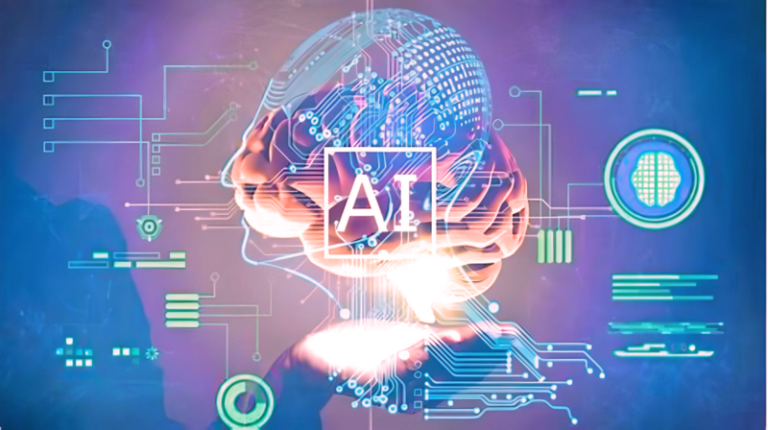
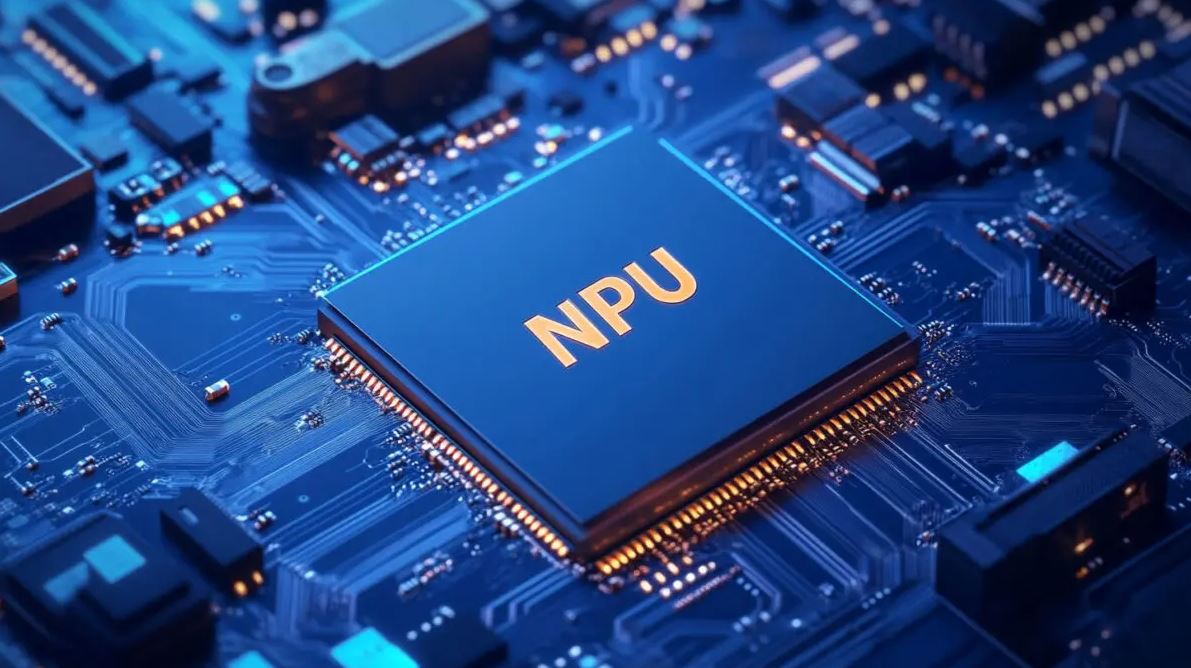
An NPU, or Neural Processing Unit, is a specialized processor designed to handle deep learning algorithms and artificial intelligence (AI). Its main purpose is to optimize the processing of complex machine learning tasks, making AI applications faster and more efficient.
The NPU was developed to overcome the limitations of the CPU (Central Processing Unit) and GPU (Graphics Processing Unit) in information processing. While the CPU is typically used for diverse computing tasks and excels at sequential processing, the GPU is powerful at parallel processing but cannot be optimized for deep-learning tasks the way an NPU can.
How does NPU work?
An NPU runs deep learning algorithms, in which computation is carried out through millions of simple arithmetic operations.
Parallel processing
One of the NPU's greatest strengths is parallel processing. It can perform millions of operations at once, which makes it well suited to AI applications that must handle large volumes of data. This not only improves processing speed but also allows an NPU to run complex models that would be difficult for a CPU or GPU.
Optimize deep learning algorithms
An NPU is optimized for deep learning algorithms, meaning it is designed to perform the computations needed for training and evaluating AI models as efficiently as possible. Compared with CPUs and GPUs, an NPU delivers higher performance for these tasks thanks to its distinctive hardware architecture.
Efficient memory usage
NPUs are also designed to use memory more efficiently. Instead of having to reach slower RAM, an NPU can hold data closer to its processing cores. This reduces latency during processing and improves overall performance.
The key features of an NPU
– Support for advanced AI computation: this covers operations such as regression, classification and clustering, allowing an NPU to handle more complex models and deliver more accurate results than other types of processor.
– Energy efficiency: as technology advances, the need to save energy is more important than ever. NPUs are designed with energy efficiency in mind, which lowers the operating cost of AI applications.
– Scalability: NPUs also allow for greater scalability than CPUs and GPUs. This means developers can easily upgrade their systems without having to change the entire architecture. NPUs can be integrated into existing systems or used standalone, depending on user needs.
What benefits does an NPU provide?
Adopting NPUs in today's technology applications brings more than performance gains; it opens up a range of other benefits.
– Faster processing: with parallel computation and optimization for deep learning algorithms, an NPU can perform complex operations much faster than a CPU or GPU.
– Lower operating costs: using an NPU reduces hardware and power costs, especially in large data centers. Deploying an NPU also streamlines production and application development, cutting the time and resources needed to complete technology projects.
– Improved accuracy: NPUs can improve the accuracy of AI models over time. This matters particularly in fields such as healthcare, finance and self-driving vehicles, where errors can have serious consequences.
Comparing NPUs with CPUs and GPUs
| NPU | CPU | GPU | |
| Hardware architecture | With a hardware architecture built specifically for AI, able to run millions of operations in parallel at the same time, it is well suited to machine learning applications. | A traditional processor whose architecture is built around multitasking and sequential computation | Designed for parallel processing, primarily to render graphics |
| Processing performance | Designed to process matrix and vector arithmetic quickly | CPU speed is usually measured in gigahertz (GHz), reflecting the number of cycles the CPU can execute per second. | Struggles to optimize the specific arithmetic that AI requires |
| Real-world use cases | The NPU is a leading choice for AI applications, from smartphones to autonomous robots. NPUs can be embedded in smart devices, improving the user experience and opening up new possibilities for the technology. | CPUs are used in almost every electronic device, from personal computers to enterprise servers | GPUs are used mainly in graphics, gaming, and some AI applications, but they are not optimal for every type of task |
When to use an NPU
The decision to use an NPU instead of a CPU or GPU depends on the specific requirements and goals of each application. Below are some situations in which an NPU may be the best choice.
– AI and deep learning applications:
If you are building an application that requires processing complex AI algorithms — such as object recognition, semantic analysis, or speech processing — an NPU is the optimal choice. NPUs can increase processing speed and improve accuracy, which matters greatly in applications that demand high reliability.
– Mobile devices and IoT:
Using an NPU in mobile and IoT devices helps save power and boost performance. Devices such as smartphones and security cameras can all benefit from NPU integration, enabling AI tasks to run locally without needing an internet connection.
– Research and development projects:
If you are a researcher or software developer looking for an efficient way to test deep learning models, an NPU is an excellent choice. It saves time and resources during development, letting you focus on improving your algorithms and models.
Conclusion
The NPU is a significant step forward in information processing, particularly for artificial intelligence applications. With fast processing, energy efficiency and high accuracy, NPUs are becoming a leading choice for developers and businesses.
Compared with CPUs and GPUs, the NPU not only delivers higher performance but also opens up new opportunities for future technology. Understanding what an NPU is, how it works and what it offers will help you make the right decisions about applying the technology in your own projects.