
Automatic Call Distribution (ACD) is a technology that optimizes call handling in contact centers. ACD lets businesses route calls to the right department or agent, improving the customer experience and the efficiency of the support team. To better understand ACD, let'sPho Tue SoftWare Solutions JSC find out more in the article below.
What is ACD?
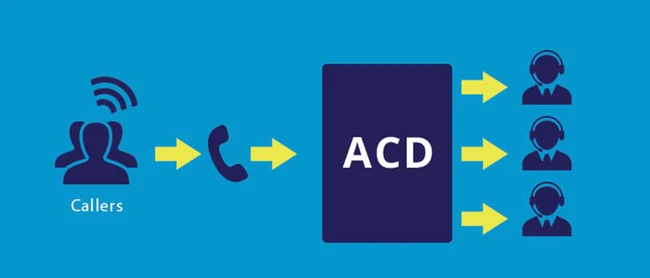
Automatic Call Distribution (ACD) is a system for managing and routing incoming calls efficiently. It is typically used in customer service centers, where call volumes can be very high over a short period. ACD automates the distribution of calls to customer service representatives according to defined criteria such as handling capacity, area of expertise or call order.
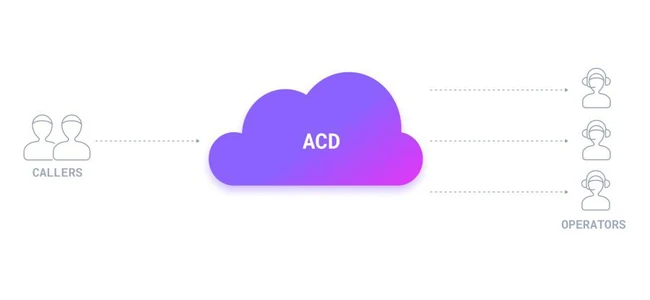
ACD works on a few basic principles, such as analyzing call data and scheduling in order to route calls. When a call arrives, ACD records information such as the phone number, the time of the call and the call content in order to decide how to distribute it.
ACD usually comes with features such as call recording, statistical reporting and service quality monitoring. These help a business improve productivity and raise the standard of customer service.
How does Automatic Call Distribution work?
An ACD system works through a sequence of steps, each of which plays an important role in the process. Here is how ACD works:
Receiving calls:When a call comes in, the ACD system identifies and answers it.
Identify call information:The system can use information such as the caller's phone number, the time of the call or customer data to decide how the call is handled.
Call classification:ACD classifies calls using preprogrammed criteria such as the type of service requested or the priority level.
Select an agent:The system finds and selects a suitable agent to take the call. This can be based on several factors, such as:
- Staff availability status
- Staff skills and expertise
- The wait time of the previous call
Call connection:ACD routes the call to the selected agent, streamlining the customer service process.
Classification of current ACD methods
There are several ways to implement an ACD system, each with its own advantages and drawbacks. The most common are described below.
- Distribution in fixed order (Fixed Order Distribution)
Fixed-order call distribution means assigning customer calls to agents in a predetermined order that does not change. This method keeps call allocation fair and is easy to manage.
- Round-robin distribution (Circular Distribution)
Round-robin routing is close to fixed call distribution. The only difference is that it is designed to balance agent workload more evenly.
In this method, calls are routed to each agent in turn, so every agent gets a chance to take a call. The benefit is an even distribution of work across the team.
- Simultaneous call distribution (Simultaneous Distribution)
This method sends the call signal to every agent at once. Whoever answers first takes the call.
- Time-based distribution
The system lets agents set their own working hours and take calls only within them. This approach optimizes productivity around each agent's actual availability.
- Skill-based distribution (Skill-Based Routing)
Calls are routed according to each agent's skills and expertise. The system assesses what the call requires and how difficult it is, then routes it to the best-matched agent.
- Call segmentation (Call Segmentation)
VIP customers, or those who have had a good interaction previously, can be routed directly to the agent they were satisfied with. This approach improves the customer experience and increases satisfaction.
- IVR integration (Interactive Voice Response)
Combine ACD with IVR to guide callers through a set of pre-programmed options. This increases automation and reduces the load on call center agents.
Some key features of ACD
Below are some key ACD features:
Call recording
Call recording not only helps businesses capture call information but also serves to evaluate service quality. Through recordings, businesses can analyze staff attitudes during calls and use that insight to improve performance and increase customer satisfaction.
Data reporting and analysis
The ACD system provides a range of reports that allow a business to track performance. These reports can cover waiting times, call abandonment rates and customer satisfaction levels.
Integrate with CRM systems
ACD systems today integrate easily with customer relationship management (CRM) software. That helps businesses optimize their communication processes and manage customer information, and it also reduces errors in data entry.
Benefits of using ACD
Using ACD brings a number of benefits to a business, not only in saving time but also in improving service quality.
- Enhance the customer experience:When calls are distributed quickly and accurately, customers are more satisfied with the service they receive. In today's fiercely competitive environment, delivering excellent customer service has become a critical factor that helps businesses stand out in their industry.
- Optimize workflows:With features such as call recording and reporting, staff can learn from past interactions and improve their communication skills. Businesses can also build a more disciplined workflow, reducing wasted time and improving overall productivity.
- Cost savings:Although an ACD system requires upfront investment, over the longer term it can save a business a great deal by streamlining processes and raising productivity.
How is ACD different from IVR?
ACD is often confused with IVR (Interactive Voice Response), but the two systems serve different functions and purposes.
| ACD | IVR | |
| Definition | An automatic call distribution system that routes calls to the right department or agent based on defined criteria | A system that lets customers interact with machines using the telephone keypad or their voice. |
| Objective | Ensures every call is handled quickly and efficiently. | Gives callers information automatically, without needing a service agent |
| Functionality | Focuses on call distribution | Provides information to customers automatically |
| Interaction | Routes a customer request straight to the right department without going through a selection stage | Asks the caller to choose an option before being routed to a support representative |
When should a business use an automatic call distribution system?
ACD is not always necessary in a business, but there are specific situations in which deploying it is a sound decision.
When the call volume is high
Any business that handles a high volume of calls in a short window will need ACD. The system manages and distributes calls efficiently, prevents agents from being overloaded and ensures every call is handled.
When you need to improve service quality
If your business is struggling to maintain service quality because of high workload, ACD addresses exactly that problem. Better service quality drives customer satisfaction and loyalty — an outcome every business wants.
When you need to optimize a workflow
ACD is also an excellent option for businesses that want to streamline their workflows. By organizing and distributing calls efficiently, a business can save time and resources and redirect them to other important activities.
The HiTech Call Center solution from Pho Tue SoftWare Solutions JSC
Bizfly Cloud provides a complete Call Center solution on a modern platform, making it straightforward for businesses to manage and route inbound calls. With flexible integration, Pho Tue SoftWare Solutions JSC's Call Center system is more than a call management platform: it also helps businesses improve the customer experience and streamline their workflows.
Features such as call recording, analytics reporting and CRM integration give a business an overall view of its customer care operations.
Conclusion
An automatic call distribution (ACD) system is a tool that saves businesses time and cost. It also improves the customer experience and optimizes workflows.
With a clear understanding of ACD and the benefits it delivers, a business can put the technology to its most effective use in order to grow and survive in a fiercely competitive market.