What is an uptime tier? It is an important term in IT and data management, particularly when it comes to building and running data centers effectively. As demand for storage and information processing grows, understanding the uptime tiers helps organizations choose the option that fits their needs. So what is an uptime tier, and what do the different tiers mean? Let's find out in the article below from HiTechCloud by Pho Tue SoftWare Solutions JSC.
What is an uptime tier?
The uptime tier concept was developed and standardized by the Uptime Institute. Each level from Tier 1 to Tier 4 corresponds to a different level of availability and sets specific requirements for the design and structure of a data center. The higher the tier, the greater the availability — that is, the greater the ability to run continuously without incident and to recover quickly when an incident does occur.
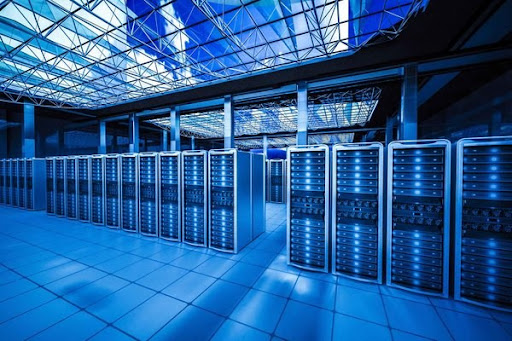
Which factors are used to assess the Uptime Tier?
When assessing a data center against the uptime tier standard, there are several key factors that specialists typically examine. These help not only in understanding the infrastructure but also in making sound decisions about building and maintaining systems.
Availability
Availability is the first and most important factor when evaluating an uptime tier. It refers to how consistently a system can run without interruption. Systems classified under different uptime tiers demonstrate different levels of availability.
For example, a Tier 1 data center offers availability of only about 99,671% per year, whereas a Tier 4 data center can deliver availability of up to 99,995%. That difference is clearly reflected in the design and structure of each tier.
Resilience
Resilience refers to a system's ability to recover quickly after an incident. At higher uptime tiers, systems are typically equipped with redundant components, meaning that if one part of the system fails, another part can continue operating.
For example, in a system that meets the Tier 3 standard, if one power source fails the system can switch to a backup power source without interrupting service. This increases the flexibility and reliability of the system.
Design and architecture
The design and architecture of a data center is another important factor in assessing its uptime tier. Data centers classified at different tiers differ in structure and design, from the power system and cooling system through to the network components.
Each tier requires its own design standards to keep the system running continuously and safely. For example, Tier 4 requires not just a backup power system but also multiple layers of security and temperature control to keep everything running smoothly.
Management and maintenance
Finally, management and maintenance capability also plays an important role in evaluating an uptime tier. A well-managed system ensures that every component is properly maintained and functions correctly. This includes monitoring performance, performing scheduled maintenance, and resolving incidents promptly.
A data center is not simply a physical facility; it is a complex ecosystem with many elements that must be coordinated and managed. Applying sound management and maintenance processes therefore improves the stability and availability of the system.
The international data assessment levels in detail
Uptime tiers are divided into four main levels, Tier 1 through Tier 4, each with its own requirements and characteristics. Understanding the details of each level helps businesses make better decisions about building and maintaining their systems.
Tier 1 (Basic Capacity)
Tier 1, also known as “Basic Capacity”, is the most basic level of the uptime tier classification. Although it is the minimum level, it still has defining characteristics.
A data center at this tier typically has only a single power path and no redundant components. That gives it the lowest system availability of any tier.
Statistically, Tier 1 availability typically reaches only about 99,671%, which means roughly 28.8 hours of downtime per year.
With that design, organizations on Tier 1 face greater risk when an incident occurs. If one part of the system fails, the entire data center can be affected.
In short, Tier 1 suits smaller businesses where availability requirements are modest and budgets are limited. As demand for stability and reliability grows, however, investing in a higher tier becomes necessary.
Tier 2 (Redundant Capacity Components)
Tier 2, also known as “Redundant Capacity Components”, improves availability over Tier 1 by adding a number of redundant components.
A Tier 2 data center may have two power feeds or duplicate key components to keep operations running. It still does not, however, support concurrent maintainability.
Tier 2 availability can reach roughly 99,741%, which is about 22.9 hours of downtime a year. Although some components are redundant, maintenance cannot be performed concurrently, so Tier 2 still carries a risk of service interruption during maintenance work.
With Tier 2, a business gets greater stability than with Tier 1, but this level still deserves careful consideration before it is chosen. Investing in a higher tier can deliver greater long-term benefit.
Tier 3 (Concurrent Maintainability)
Tier 3, also known as “Concurrently Maintainable”, is the next level of the uptime tier classification and a common choice for medium and large enterprises.
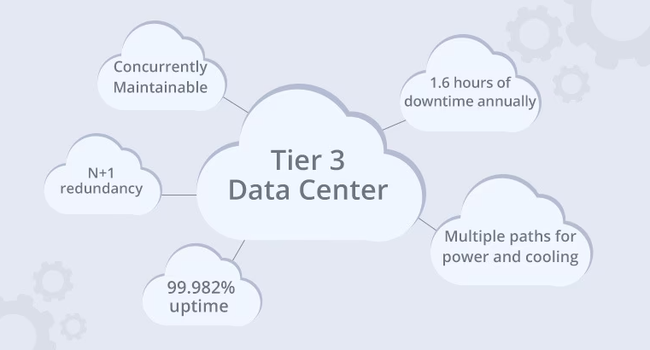
At this tier, the data center is designed to allow concurrent maintenance without affecting system operation. Redundant components can run in parallel with the primary ones, so no downtime occurs.
Tier 3 availability can reach around 99,982%, equivalent to roughly 1.6 hours of downtime per year. With Tier 3, businesses can be more confident in continuous operation. It is a sound choice for organizations with high availability requirements that want to minimize risk.
Many organizations therefore now take Tier 3 as the standard for their data centers, to secure stability and reliability in a competitive business environment.
Tier 4 (Fault Tolerance)
Tier 4, also called “fault tolerant”, is the highest level in the uptime tier classification and offers the highest availability of any tier.
At Tier 4, a data center not only has redundant components but is also designed to withstand major incidents without service disruption. Every component can operate concurrently without any issues. Tier 4 availability reaches approximately 99,995%, meaning only about 26.3 minutes of downtime per year.
Although Tier 4 typically requires very high capital investment, its high availability and stability can deliver substantial benefit to large enterprises with demanding reliability requirements.
Tier 4 is typically used by financial and healthcare organizations and other sectors with extremely high security and availability requirements. Choosing this tier therefore calls for careful consideration of the organization’s budget and operational requirements.
How do these levels differ?
The differences between uptime tiers lie mainly in availability, structure and design, and system resilience. Each tier brings its own advantages and drawbacks depending on the specific needs of the business.
Availability
Availability is the first and most important factor distinguishing uptime tiers. As mentioned, Tier 1 achieves only around 99,671%, while Tier 4 can reach up to 99,995%. This gap matters greatly to organizations, especially in industries that require high continuity.
Structure and design
The structure and design of data centers also change considerably from one tier to the next. From power and cooling components through to the network, each tier requires its own design standards.
For example, a Tier 1 data center may have only a single power source, while Tier 4 requires multiple layers of protection and redundant components to maximize stability.
Resilience and maintenance
Recoverability and maintainability are also key factors distinguishing the tiers. Many organizations choose higher tiers for this reason. While Tier 1 and Tier 2 do not allow concurrent maintenance, Tier 3 and Tier 4 offer this flexibility, reducing risk and downtime.
In short, the difference between uptime tiers is not only the availability figure; it also shows clearly in the design, the resilience and the maintenance requirements of the system.
How should a business choose its data center by Uptime Tier?
Choosing the right uptime tier is not straightforward and depends on many factors, including operational requirements, budget and the organization's overall business strategy. Below are several criteria a business should weigh when making that choice.
Define business objectives
First, a business needs to be clear about its commercial objectives. If your operations depend heavily on availability and continuity, choosing a data center at a high tier such as Tier 3 or Tier 4 is the sensible option.
Conversely, if your business is a small start-up with a limited budget, Tier 1 or Tier 2 may be a viable choice. Bear in mind, however, that investing in a higher-availability system can be more cost-effective over the long term.
Budget assessment
Budget is also an important factor when choosing an uptime tier. Data centers at different tiers carry different capital and running costs, so a business should assess its financial capacity carefully before deciding.
Also consider hidden costs such as maintenance fees, insurance and the cost of downtime when an incident occurs. A higher tier brings greater peace of mind, but at a higher price.
Learn about the service provider
Finally, research the service provider you plan to work with. Not every data center is built to the uptime tier standard. Make sure the provider holds the relevant certification and can deliver services that match your requirements.
This not only ensures that your systems run well, it also helps you avoid unnecessary risk. Do not hesitate to ask about the data center’s maintenance plans, operating procedures and recovery capabilities.
Conclusion
That covers uptime tiers and the tier levels from Tier 1 to Tier 4, along with the factors used to assess them. Choosing the right uptime tier is an important decision that has a direct bearing on how a business operates and grows. Look into it carefully before deciding, so that you can rely on the stability and dependability you need in an increasingly competitive market.